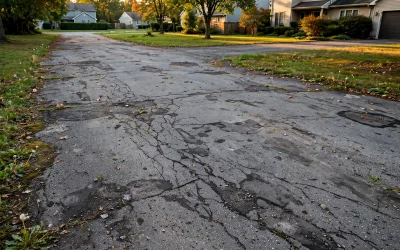
Cracks are where driveways die. Not the fading colour, not the surface wear — the cracks, because every one of them is a doorway for water, and in Ontario, water plus winter is a demolition crew. Crack filling is the cheapest structural insurance your driveway has. Here’s what it costs, which cracks matter, and why it has to happen before the sealer goes on.
What Crack Filling Costs in the GTA
The industry’s rough standard is about $1 per linear foot for professional crack filling. A typical residential driveway might have 75–150 linear feet of cracks worth filling, which puts most jobs in the $75–$150 range as an add-on to a sealing job. That’s the sweet spot: bundled with sealing, crack filling is cheap because the crew, the equipment, and the trip are already paid for.
Standalone crack-filling visits cost more per foot in practice — most operators have a minimum charge for rolling a truck, since the trip and setup are the same whether they’re filling 20 feet or 200. If your driveway needs crack work but isn’t due for sealing, expect to pay that minimum. Which is exactly why the smart move is to bundle crack filling with your regular seal every 2–3 years — you pay the trip charge once and get both done.
One pricing note: be wary of anyone who wants to charge nearly as much for crack filling alone as for a full seal. The materials are inexpensive; you’re paying for labour, equipment, and expertise — not gold.
Which Cracks Actually Matter
Not every crack deserves filler. Here’s the triage:
Hairline cracks (under ~3mm / 1/8″)
Cosmetic. These are surface shrinkage cracks — the asphalt equivalent of wrinkles. A quality sealer bridges them on its own, and filling each one individually would cost more than it’s worth. If your driveway is mostly hairlines, sealing alone handles it.
Working cracks (3mm–20mm / 1/8″–3/4″)
These are the ones to fill. Wide enough for water to enter, narrow enough that filler bonds well and flexes with the asphalt. This is the bread and butter of crack-filling work — the cracks that, left alone, become the potholes of next spring.
Wide cracks (over ~20mm / 3/4″)
Fillable, but they need proper prep — cleaning out debris and vegetation, sometimes a backer material so the filler doesn’t just sink into the void. A pro handles these routinely; it’s still far cheaper than the alternative.
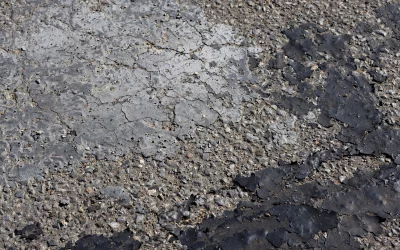
Alligator cracking (interconnected web pattern)
Filler won’t save these. Alligatoring means the base underneath has failed — the asphalt is flexing because there’s nothing solid beneath it. Filling the individual cracks is cosmetic; the pattern will return within a season. This driveway needs structural repair (patching or resurfacing), not maintenance. See our sealing vs. resurfacing guide — and be skeptical of any contractor who’ll happily fill and seal over alligatoring without mentioning it.
Edge cracks and cracks near the garage
Pay special attention here. Edge cracks let water undermine the driveway’s sides; cracks where the driveway meets the garage floor direct water toward the foundation. These are high-priority fills even when they’re small.
Why Crack Filling Must Come Before Sealing
This is the step that separates a real seal job from a paint job. Sealer is a surface coating — a few millimetres thick. It cannot bridge an open crack. Water goes straight through the crack, under the beautiful new black surface, and sits against the base. Then winter does what winter does: it freezes, expands, and pries the crack wider. Every freeze-thaw cycle is a tiny jackhammer working under your new seal.
Proper crack filler — hot-applied rubberized asphalt — does what sealer can’t: it bonds to the crack walls and stays flexible, stretching and compressing as the asphalt moves with temperature swings. Then the sealer goes over the top, waterproofing everything as a system. Fill first, seal second, in that order, on the same job. Any contractor who wants to seal without addressing open cracks is selling a cosmetic coat with a short life — one of the red flags to watch for.
Hot Rubberized vs. Cold-Pour: What the Pros Use
Hot-applied rubberized crack filler is the professional standard: heated to around 175°C, poured or wand-applied into cleaned cracks, it bonds deeply and stays pliable through freeze-thaw for years. It requires specialized equipment (a melter kettle), which is why it’s a pro product.
Cold-pour filler — the squeeze tubes and caulk-gun cartridges at the hardware store — is a reasonable DIY stopgap for a few small cracks. It doesn’t bond as deeply, doesn’t flex as well, and typically lasts a season or two. Fine for touching up; not a substitute for a proper hot-applied job across the whole driveway.
If a contractor shows up with only cold-pour tubes for a full driveway’s worth of cracks, you’re not getting professional crack-filling — you’re getting a handyman special.
Can You Just DIY the Cracks?
Honestly? For a handful of small cracks, yes — a $15 tube of cold-pour filler, a wire brush, and a dry afternoon will buy you a season. Clean the crack thoroughly (debris and weeds are the #1 reason DIY fills fail), apply on a warm dry day, and don’t overfill.
But here’s the economics: if you’re already having the driveway sealed professionally, the incremental cost of having the crew hot-fill every crack properly is small — and the result lasts years instead of a season. DIY makes sense as emergency triage; as a maintenance strategy, bundling wins.
The Bottom Line
Crack filling is the highest-value maintenance an asphalt driveway gets: roughly $1 per linear foot, and it’s what stands between small cracks and expensive structural damage. Fill the working cracks, don’t bother with hairlines, don’t waste money filling alligatoring — and always fill before the sealer goes on.
Walking your driveway and seeing cracks you’re unsure about? Request a free quote — we’ll assess every crack honestly, fill what needs filling, and tell you straight if something needs more than maintenance. Serving Markham, Richmond Hill, Vaughan, Aurora, Newmarket, Stouffville, and surrounding York Region.

0 Comments