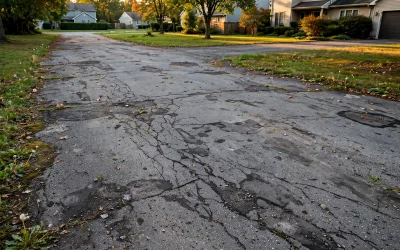
It’s mid-October in the GTA, the leaves are turning, and you’re looking at your driveway thinking maybe I should get this sealed before winter. Reasonable instinct — but October is the trickiest month of the year for this decision. Seal too late and the cold ruins the job; wait and you’re looking at spring. Here’s how to know which side of the line you’re on.
The 10°C Rule: It’s About Pavement, Not Air
Every professional sealer works to the same number: 10°C (50°F) pavement temperature. That’s the minimum most sealer manufacturers specify, and it’s pavement temperature — not the number on your weather app. Asphalt holds heat, so on a sunny October afternoon the surface can be several degrees warmer than the air. But on an overcast day, or in a shaded driveway, it can be colder.
Why does it matter? Sealer needs warmth to cure — the water in the emulsion has to evaporate so the protective solids can bond into a continuous film. Below 10°C, that process slows to a crawl or stalls. And curing isn’t the only requirement: the sealer also needs roughly 24 hours with no rain and no frost after application. One cold night can undo a whole job.
DIY products at the hardware store sometimes claim they’ll cure at 4°C. Treat that as marketing for a best-case afternoon, not a promise a professional will stand behind. No reputable contractor warranties a seal applied in marginal conditions — and that tells you everything.
Why October Nights Are the Real Problem
Here’s the part most homeowners miss: it’s not the daytime high that kills a late-fall seal, it’s the night. GTA Octobers routinely swing 10–15 degrees between afternoon and overnight. A 14°C afternoon feels safe — until the temperature drops to 3°C overnight and frost forms on the fresh sealer.
Frost on uncured sealer is a job-killer. It interrupts the curing film, leaves a cloudy or whitish finish, and creates weak spots that peel or flake within a season. Dew is the quieter cousin of the same problem: heavy October morning dew keeps the surface damp and stretches cure time past the safe window.
Add the shrinking daylight — fewer warm hours for the sealer to set up before the cold returns — and you can see why experienced GTA operators start winding down in October. May and June are the prime window for a reason; September is the smart second choice. October is a gamble.
What Actually Goes Wrong With a Cold-Cured Seal
This isn’t theoretical. When sealer is applied too late in the season, the failures are predictable:
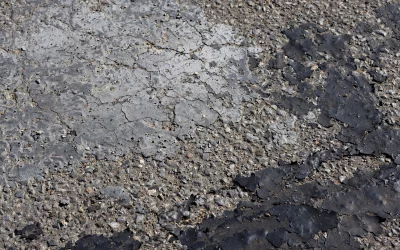
- Peeling and flaking — the film never bonded properly, so it lifts in sheets or patches, sometimes within weeks.
- Tire tracking — soft, under-cured sealer picks up on tires and gets tracked onto the garage floor or street.
- Wash-off — a rainstorm before full cure can streak or wash thin spots right off the surface.
- Cloudy finish — moisture trapped in the film leaves a milky haze instead of that deep black.
The painful part: you paid full price for a job that now needs to be redone in spring. A rushed October seal is often more expensive than no seal at all.
The Honest Cutoff for the GTA
So where’s the line? There isn’t a date on the calendar — it’s the forecast. A reputable contractor will look for several consecutive days above 10°C with overnight lows staying above freezing and no rain. In a warm October, that window can stretch surprisingly late. In a cold one, the season can effectively end in early October.
As a rule of thumb: if overnight lows are regularly dipping toward 0°C, the season is over, full stop. Most GTA operators plan to be finished by mid-to-late October in a normal year — many state their season runs April to November weather permitting, and the “weather permitting” is doing a lot of work in that sentence.
If a contractor is happy to seal your driveway in late October without talking about the forecast, that’s a red flag — see our questions to ask before hiring.
What to Do Instead Right Now
Missing the window isn’t the end of the world. Here’s the smart October playbook:
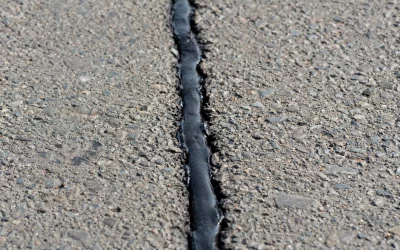
1. Get cracks filled. Crack filling is more temperature-forgiving than sealing — hot-applied rubberized filler bonds in cooler conditions — and it’s the single most valuable thing you can do before winter. Every crack you fill now is water that won’t freeze, expand, and widen that crack all winter. If you do one thing this fall, make it this.
2. Book your spring seal now. Good operators fill their May calendars fast — it’s the prime window and everyone wants it. Booking in fall or winter locks in your spot. Get on the spring schedule and you won’t be scrambling in April.
3. Go easy on the salt. Rock salt is brutal on asphalt — it works into pores and accelerates freeze-thaw damage. If you must de-ice, calcium or magnesium chloride products are less harsh, and shoveling promptly beats chemicals every time.
4. Note what you see. Walk the driveway now and note new cracks, low spots where water pools, and edges that are crumbling. That list becomes your spring work order.
The Bottom Line
Mid-October sealing in the GTA is a forecast call, not a calendar call — and once overnight frosts arrive, the honest answer is to wait. A seal that can’t cure properly is money wasted. Fill the cracks now, protect the surface through winter, and book the real seal for spring when the 10°C days return.
Not sure whether your driveway can wait? Request a free quote — we’ll give you a straight answer on timing, and if it’s too late this year, we’ll put you first in line for spring. Serving Markham, Richmond Hill, Vaughan, Aurora, Newmarket, Stouffville, and surrounding York Region.

0 Comments