“How long will it last?” is the first question most homeowners ask about driveway sealing — and the most honestly answered with a range, not a promise. In Ontario, the realistic answer is 2–3 years of real protection from a professional seal job. Here’s what sits behind that number, what shortens it, and how to tell when yours is done.
The Short Answer: 2–3 Years
That 2–3 year figure is the consensus across GTA contractors, and it’s the interval in our how-often guide. Anyone promising 5+ years from a standard seal is selling you something — or describing a best case in a mild climate, which Ontario is not.
Note the distinction that matters: the driveway will look good for most of that period, but looks and protection diverge. By year three the black may still be decent while the waterproofing is mostly gone. That’s why the hose test matters more than your eyes — spray water on the surface; if it soaks in instead of beading, the protection is done even if the colour lingers.
What Actually Controls Sealer Lifespan
1. The type of sealer
Oil-based sealers generally outlast water-based (emulsion) sealers — tougher film, deeper penetration — at the cost of longer cure times and stronger fumes. A quality oil-based job can push toward 3 years; a single thin coat of water-based product might give you 2. We break down the full trade-off in our oil vs. water-based guide. Whatever the type, two coats beats one — the second coat roughly doubles the film thickness, and film thickness is what stands between your asphalt and the weather.
2. Prep quality
Sealer is only as good as what it’s stuck to. A driveway that was properly cleaned — degreased, power-washed, oil spots treated — holds sealer far longer than one that got a quick blow-off and a coat. This is the invisible difference between a 2-year job and a 3-year job, and it’s why prep is the longest part of our process. Ask any contractor what they do before the sealer comes out; the answer predicts the lifespan.
3. Traffic
A driveway that parks two cars daily and gets turned on wears faster than one that mostly sits empty. Tight turning — steering while stationary — scrubs the sealer film mechanically. Heavy vehicles (work trucks, trailers) accelerate it further. High-traffic driveways live at the 2-year end of the range.
4. Sun exposure
UV is asphalt’s slowest, most relentless enemy. A south-facing driveway with no shade gets hammered all summer; a shaded, north-facing one keeps its sealer noticeably longer. You can’t change your orientation, but it’s worth knowing why your neighbour’s driveway still looks new while yours is fading.
5. Salt and de-icers
Ontario’s signature sealer-killer. Road salt and de-icing chemicals don’t just melt ice — they work into the asphalt’s pores and attack the binder, and every freeze-thaw cycle flexes the surface. Driveways with heavy salt exposure (corner lots near salted roads, steep driveways that get extra treatment) wear faster. This is the main reason Ontario lifespans run shorter than the same product would in a milder climate.
6. Drainage
Standing water is sealer’s enemy. Low spots where water pools after rain keep the film saturated and speed up breakdown. If your driveway holds puddles, the sealer there will fail first — and the underlying asphalt is taking water damage the whole time.
Year by Year: What to Expect
Year 1: Deep black, water beads, the full showroom look. This is the honeymoon.
Year 2: Colour starts softening, especially in tire tracks and sun-exposed areas. Water still beads in most places. Protection is working; cosmetics are fading. This is normal — not a defect.
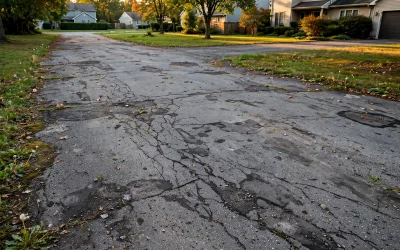
Year 3: Greying returns in patches, the hose test starts failing in high-traffic zones, small cracks may reappear. Time to plan the recoat. Waiting past this point means the asphalt itself starts taking damage.
Past year three without recoating, you’re no longer maintaining — you’re letting the driveway degrade. The sealer did its job; it just needs renewal.
5 Signs Your Sealer Is Wearing Off
- The grey is coming back. Returning oxidation means the UV barrier is gone — see our guide on why driveways turn grey.
- Water soaks in instead of beading. The 30-second hose test. Failing it means the waterproofing is gone.
- Small cracks are reappearing. The film has thinned enough that the asphalt is moving and cracking underneath.
- The surface feels rough or porous. A protected driveway feels smooth and slightly sealed; a worn one feels like raw aggregate under your hand.
- Edges and tire tracks wear first. Check where cars turn and along the edges — these always go first, and they’re your early warning.
What About “Lifetime” or “10-Year” Sealer Claims?
You’ll see products and contractors advertising extended-life or “permanent” sealers. The honest version: premium products (acrylic-modified, high-solids formulas) genuinely last longer than standard emulsion — perhaps 3–5 years in good conditions. But nothing you paint on asphalt lasts a decade in Ontario. Freeze-thaw, salt, UV, and traffic are undefeated. Treat any “lifetime” claim as marketing, and ask what the warranty actually covers — most cover peeling and defects, not normal wear.
Getting the Full 3 Years Out of Every Seal
You can’t change the climate, but you can maximize what you get:
- Insist on proper prep — cleaning and degreasing before anything else.
- Two coats, not one — the single biggest lifespan lever.
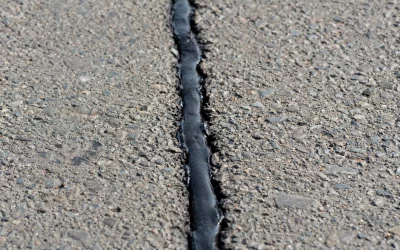
- Crack-fill first — sealing over open cracks wastes the sealer’s protection.
- Go easy on salt — shovel first, use less, choose calcium or magnesium chloride over rock salt.
- Recoat on schedule — every 2–3 years, before the old sealer fully fails. Recoating a sound surface is cheap; restoring a degraded one isn’t.
The Bottom Line
In Ontario, plan on 2–3 years per professional seal — 2 for high-traffic, sun-blasted, salt-heavy driveways, 3 for sheltered, well-prepped ones. Watch for the signs, trust the hose test over your eyes, and recoat before the protection is fully gone. At $250–$400 for a typical GTA double-car driveway, it’s the cheapest maintenance your driveway will ever get.
Not sure where your driveway is in the cycle? Request a free quote — we’ll assess it honestly and tell you whether it’s time. Serving Markham, Richmond Hill, Vaughan, Aurora, Newmarket, Stouffville, and surrounding York Region.

0 Comments