If you own a home in Ontario, your driveway is fighting a battle every single year — and most of the damage happens in the months you’re not even thinking about it. Between the deep freezes of January, the spring thaw, road salt, and summer UV, asphalt in this province ages faster than almost anywhere else in North America. That raises the question every homeowner eventually asks: how often should you actually seal your asphalt driveway?
The short answer: every 2 to 3 years for most Ontario driveways. But the real answer depends on your driveway’s age, sun exposure, drainage, and how brutal the last couple of winters were. This guide breaks down the rule, the exceptions, and the warning signs that mean your driveway is overdue.
Why Ontario Driveways Need Sealing More Often
Asphalt is essentially stone aggregate held together with a petroleum-based binder. That binder is what gives a new driveway its deep black colour and flexibility. Two things destroy it: oxidation (sun and air drying it out) and water intrusion (moisture getting into tiny cracks and pores).
Ontario delivers both in extremes. Summer UV bakes the surface and oxidizes the binder, turning it from black to grey. Then winter arrives, and water trapped in the pavement freezes and expands — the classic freeze-thaw cycle. Each cycle wedges cracks a little wider. Add road salt tracked in from the street, which is corrosive to asphalt, and plow blades scraping the surface, and you have about the harshest environment an asphalt driveway can face.
Sealer is a protective coating that slows all of this down. It replenishes the surface oils, blocks UV, and — most importantly — keeps water out. But sealer itself wears away. In Ontario’s climate, a quality seal coat typically lasts 2 to 3 years before it has thinned enough that the asphalt underneath is exposed again.
The 2-to-3-Year Rule (and When to Adjust It)
For a typical residential driveway in York Region or the GTA — a double-car asphalt driveway, decent drainage, no major structural issues — plan on sealing every 2 to 3 years. Here’s how to fine-tune that:
Seal every 2 years if:
- Your driveway gets full sun all day (south or west facing with no tree cover). UV is the fastest killer of binder.
- You live on a busy street or corner lot where the city plows pile heavy, salty snow on your driveway edges.
- Your household runs 3+ vehicles with daily in-and-out traffic, or you park work vehicles on it.
- Water pools anywhere on the surface after rain. Standing water accelerates everything.
- The driveway is more than 10 years old. Older asphalt is more porous and drinks sealer faster.
Every 3 years is fine if:
- The driveway is mostly shaded or north-facing.
- Drainage is good and water sheets off cleanly.
- It’s a newer driveway (under 5 years) that was sealed on schedule from the start.
- Vehicle traffic is light — one or two cars, no heavy vehicles.
5 Signs Your Driveway Is Overdue for Sealing
Don’t just go by the calendar. Your driveway will tell you when the protection is gone. Look for these:
1. The colour has faded from black to grey
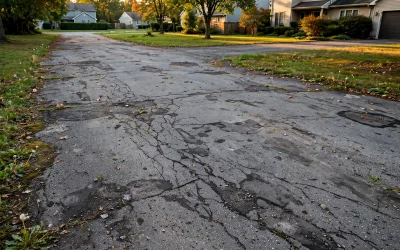
This is the earliest and most reliable sign. Fresh sealer is jet black. As it wears, the surface fades to charcoal, then grey. When your driveway is noticeably grey, the sealer is mostly gone and the bare asphalt is exposed to UV and water. If you can see a clear colour difference between the area under your parked car (protected) and the exposed areas, you’re overdue.
2. Small hairline cracks are appearing
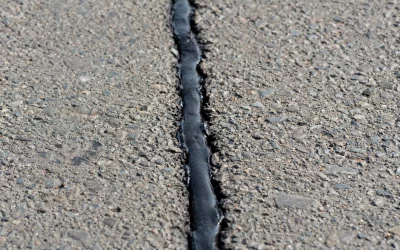
Hairline surface cracks — the kind you can barely fit a coin into — are the asphalt telling you it’s drying out. Sealer fills and bridges these micro-cracks. Left alone, they widen with each freeze-thaw cycle until they need proper crack filling before the next seal coat.
3. Water no longer beads on the surface
Do the hose test: spray water on the driveway. On a well-sealed surface, water beads up and runs off. On worn sealer, water soaks in and darkens the asphalt — that darkening is water penetrating the pavement, exactly what sealer is supposed to prevent.
4. The surface feels rough and the aggregate is showing
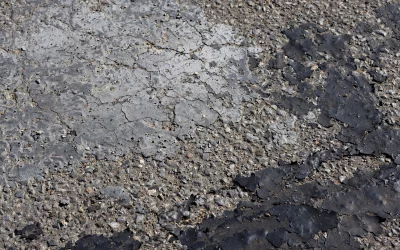
Run your hand over the asphalt. A sealed driveway feels relatively smooth. When the binder wears away, the stone aggregate starts to protrude and the surface feels like coarse sandpaper. Loose stones at the edges of the driveway are another tell.
5. It’s been more than 3 years (or never)
If you bought a house and have no idea when the driveway was last sealed, assume it needs it. Many Ontario driveways go 5+ years between sealings, and by then the damage compounds — what would have been a routine $250–$400 seal coat becomes crack repair plus sealing. You can see typical driveway sealing costs in the GTA to calibrate.
What About a Brand-New Driveway?
One of the most common questions we hear from homeowners in new subdivisions across Markham, Vaughan and Richmond Hill: “My driveway was just paved — should I seal it right away?”
Wait 6 to 12 months. Fresh asphalt needs time to cure — the lighter oils in the new pavement need to evaporate and the surface needs to harden. Sealing too early traps those oils and can cause the sealer to peel or fail to bond. Most paving contractors in Ontario recommend waiting through at least one full summer before the first seal coat. After that, fall into the normal 2–3 year rhythm.
Can You Seal Too Often?
Yes, actually. Sealing every single year builds up layer upon layer of sealer, which can cause its own problems: the surface gets slick (especially when wet), layers can delaminate and peel, and you’re spending money for no added protection. More is not better here. Stick to the 2–3 year cycle and let each coat wear properly before recoating.
The one exception: if a single coat was applied very thin or washed out by unexpected rain shortly after application, a recoat sooner is reasonable. But that’s a workmanship issue, not a schedule.
The Cost of Waiting Too Long
Here’s the math that matters. A routine seal coat on a typical GTA double-car driveway runs roughly $250–$400. Skip it for a few extra years and here’s what tends to happen:
- Hairline cracks widen into cracks needing hot-rubber crack filling — an extra charge on top of sealing.
- Water gets under the asphalt and undermines the base, causing sinking, alligator cracking, or frost heaves.
- Once the base fails, you’re no longer talking about sealing — you’re talking about resurfacing or full replacement, which runs into the thousands.
Sealing is maintenance, not repair. It’s the cheapest money you’ll spend on your driveway precisely because it prevents the expensive problems. If you’re unsure whether your driveway just needs sealing or something more, our guide on driveway sealing vs. resurfacing walks through how to tell.
The Bottom Line
For most Ontario homeowners: seal every 2 to 3 years, lean toward 2 if your driveway faces full sun or heavy use, and watch for the warning signs — fading colour, hairline cracks, and water soaking in instead of beading. Time it for late spring or early fall when temperatures are reliably above 10°C, and never seal a brand-new driveway before it’s had 6–12 months to cure.
Not sure where your driveway stands? A quick look is all it takes. Get a free quote — we’ll assess your driveway’s condition and give you an honest answer on whether it’s due, including in Markham, Richmond Hill, Vaughan, Aurora, Newmarket and Stouffville.

0 Comments