Ask three driveway sealing contractors in the GTA what product they use and you might get three different answers: “oil-based, always,” “water-based emulsion — it’s all we use now,” and “depends on the driveway.” So who’s right? As with most things in this trade, the honest answer is: it depends on your driveway, your priorities, and Ontario’s winters.
This guide gives you a straight, no-sales-pitch comparison of oil-based and water-based (emulsion) sealers — what they are, how they perform in freeze-thaw country, and which one makes sense for your situation.
What Are We Actually Comparing?
First, some plain language. Both products do the same basic job: coat your asphalt with a protective layer that blocks water, slows UV damage, and restores that deep black look. The difference is what’s carrying the protective ingredients:
- Oil-based sealers (often called “tar-based” or “coal-tar alternatives”) use petroleum solvents as the carrier. They’re the traditional choice — the product that’s been sealing Canadian driveways for decades.
- Water-based sealers (asphalt emulsions) suspend the protective bitumen in water. They’re the newer mainstream option and now dominate the residential market in Ontario.
Both are legitimate professional products when properly applied. The debate isn’t about one being “real” and the other “fake” — it’s about trade-offs.
Oil-Based Sealer: The Traditional Workhorse
Pros
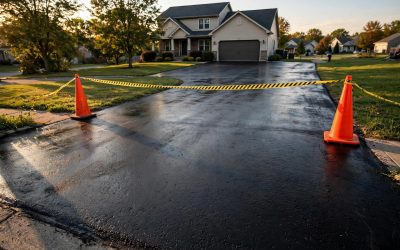
- Deepest black finish. Oil-based products are famous for that rich, jet-black look that makes a driveway pop. If curb appeal is your top priority, oil-based still wins the beauty contest.
- Excellent penetration. The petroleum carrier soaks into the asphalt’s pores, bonding tenaciously. On older, more porous driveways — common in established York Region neighbourhoods — this deep penetration is a genuine advantage.
- Strong water resistance. Once cured, oil-based coatings are highly hydrophobic and stand up well to standing water and road salt.
- Long track record in cold climates. Decades of use on Canadian driveways through countless freeze-thaw cycles. The durability data is real, not theoretical.
Cons
- Strong fumes during application. The solvents off-gas as they evaporate. You’ll smell it for a day or two, and neighbours will notice. Anyone with respiratory sensitivities, kids, or pets should keep windows closed and stay off the driveway during curing.
- Longer cure time. Typically needs a full 48 hours before vehicle traffic (sometimes longer in cool or humid weather), versus 24 for water-based.
- Harder cleanup and higher VOCs. Tools need solvents, not water, for cleanup. Volatile organic compound content is higher — and some Ontario municipalities have pushed toward lower-VOC products, so regulations are worth watching.
- Can be slippery when wet if over-applied. Technique matters more with oil-based products.
Water-Based (Emulsion) Sealer: The Modern Standard
Pros
- Low odour, low VOCs. The carrier is water, so application smells mild and dissipates fast. Much friendlier if you work from home, have kids or pets, or just don’t want the whole street knowing you sealed your driveway.
- Faster cure time. Usually ready for foot traffic in a few hours and vehicles in 24 hours under good conditions. In the GTA’s short sealing season, that faster turnaround is practical — less schedule risk if weather shifts.
- Easy soap-and-water cleanup and simpler handling for crews.
- Environmentally friendlier profile — lower emissions during application, which is part of why it’s become the default for most Ontario residential contractors.
- Good performance when properly applied. Modern refined-tar and asphalt emulsion formulas are far better than the thin water-based products of 20 years ago that gave the category a bad name.
Cons
- Slightly less dramatic black. A quality emulsion still looks great, but side by side, oil-based typically delivers a deeper, richer black. (Most homeowners wouldn’t notice without the comparison.)
- Less forgiving of poor prep. Emulsions need a clean, dry, well-prepared surface to bond. On a dirty or dusty driveway, adhesion suffers more than with oil-based. This is really an argument for hiring a contractor who preps properly, not against the product.
- Can be vulnerable during curing. If rain hits a water-based coat before it’s cured, damage is more likely than with oil-based. Your contractor should be watching the forecast regardless.
Head-to-Head: The Questions That Matter in Ontario
Which lasts longer through freeze-thaw?
Properly applied, both last the standard 2–3 years in Ontario conditions. Neither product magically doubles the interval. What determines longevity far more than the product type is surface preparation (cleaning, crack filling, oil-spot treatment) and application conditions (temperature, dry weather). A well-prepped water-based job outlasts a sloppy oil-based job every time.
Which handles road salt better?
Both resist salt reasonably once cured. Oil-based has a slight edge in raw hydrophobicity, but in practice, salt damage to driveways comes from freeze-thaw cycling in salt-laden water sitting in unsealed cracks — which either product prevents if the coating is intact. Keep the coating intact (reseal on schedule) and the difference is marginal.
Which is better for an old driveway?
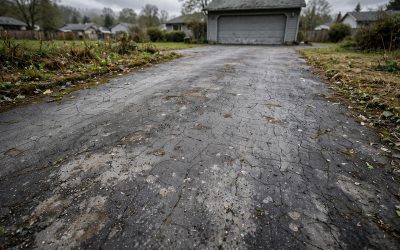
Oil-based has the edge on older, porous asphalt (15+ years), because it penetrates deeper into dried-out pavement. If your driveway is a veteran of many winters in Newmarket or Aurora and drinks up everything, oil-based is worth discussing with your contractor.
Which should I choose for a newer driveway?
For driveways under ~10 years old in good condition, water-based emulsion is the sensible default: faster cure, low odour, lower environmental impact, and plenty of protection. There’s no performance reason to default to oil-based on sound, younger asphalt.
What About the Cheap Stuff at the Hardware Store?
Worth a brief word, since many homeowners consider the DIY route: the $50–$70 pail of sealer at Home Depot or Canadian Tire (typically covering 250–400 sq ft) is a consumer-grade water-based product. It’s not the same as what professionals apply — contractor-grade sealers are more concentrated, often with added polymers and fillers for durability.
DIY can work for a small, simple driveway if you prep meticulously (and prep is where DIY jobs usually fail — 90% of a good seal job is cleaning). But factor in your time, the mess, and the shorter lifespan of consumer product, and the $250–$400 a pro charges in the GTA starts looking like reasonable value. There’s no shame in either choice — just go in with eyes open.
Red Flags When a Contractor Talks Products
Use the product conversation to judge the contractor, not just the product:
- “We only use [X], it’s the best, the other stuff is garbage.” Absolutism is a sales tactic. Good contractors explain trade-offs.
- Won’t name the product. Ask what sealer they use by brand/type. Evasiveness suggests bulk mystery product.
- “This stuff lasts 5 years.” In Ontario, no residential seal coat reliably lasts 5 years. That’s a promise designed to win the bid, not a realistic expectation.
- No mention of prep. If they don’t talk about cleaning, crack filling, and oil-spot priming, the product choice hardly matters — the job will underperform regardless.
The Bottom Line
For most Ontario homeowners with a reasonably sound driveway: water-based emulsion is the smart default — low odour, 24-hour cure, environmentally friendlier, and proven through plenty of local winters. Consider oil-based if your driveway is older and very porous, or if that deepest-black finish matters a lot to you and you can live with 48 hours of cure time and a couple days of fumes.
But remember the real hierarchy: proper prep > right conditions > product type. The contractor who cleans thoroughly, fills cracks, watches the forecast, and applies in the right temperature window will give you a better result with either product than a rushed crew with the “premium” option.
Want straight advice on what’s right for your driveway? Get a free quote — we’ll look at your asphalt’s age and condition and recommend honestly, with no product upsell. Serving Markham, Richmond Hill, Vaughan, Aurora, Newmarket and Stouffville. And if you’re weighing the calendar too, see our guide to the best time of year to seal in the GTA.


0 Comments